Commercial Tiki Huts and Bars Built for Coconut Creek & Oakland Park, FL
WHAT WE DO
Broward County sits inside Florida's High-Velocity Hurricane Zone, and a tiki structure that falls outside the tribal chickee exemption needs permitted engineering built to that standard, which matters most on property open to the public. SoFlo Tikis
builds commercial tiki huts and tiki bars in Coconut Creek, FL for resorts, hotels, restaurants, apartment communities, and other hospitality properties. We plan footprints around guest flow, frame with pressure-treated lumber sized for heavy roofs, and recommend natural palm or high-quality synthetic thatch based on exposure, maintenance budgets, and the fire requirements your property may face under local code. Every structure gets the same dense, hand-tied roof as our residential work.
WHERE WE BUILD
Pool Decks, Patios, and Waterfront Venues From Oakland Park to Coconut Creek
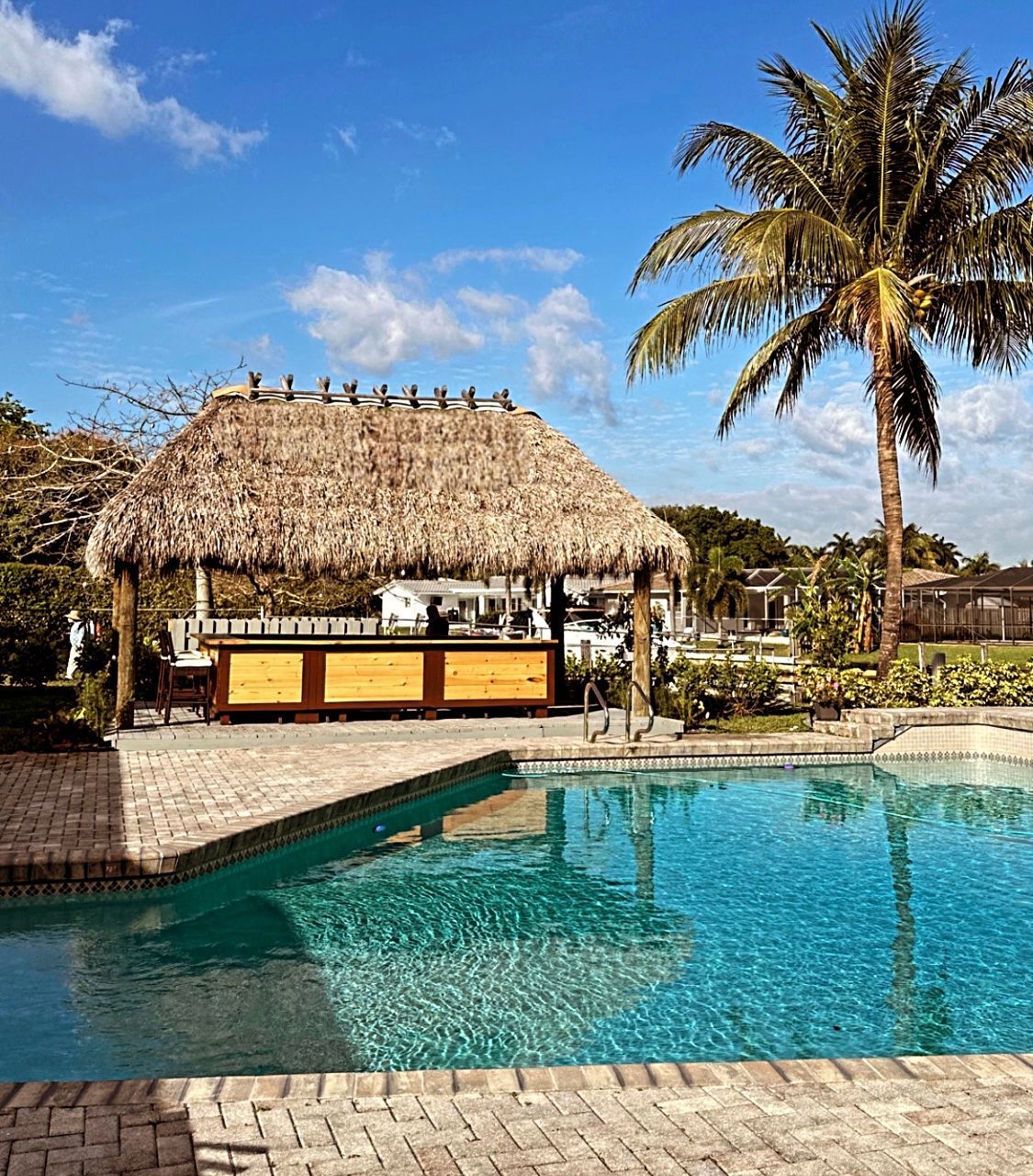
Commercial tiki work takes us to hotel pool decks, restaurant patios, clubhouse lawns, and waterfront venues in Coconut Creek & Oakland Park, FL, and across South Florida. Each setting changes the design. A beachside bar faces salt spray and stronger wind, a restaurant patio needs clear service paths and a set seating count, and an apartment amenity has to stand up to residents using it every day. We study traffic patterns, exposure, and nearby buildings first, then shape a structure that serves the property without getting in its way.
Commercial Tiki Structures We Provide
Commercial clients need structures that look inviting to guests and hold up to the wear a busy property brings. These are the commercial projects we build and maintain most often across South Florida.
01
Resort and Hotel Tiki Huts
Poolside cabanas, shaded lounges, and beach-style bars give guests a reason to stay outside longer. We size these structures for groups, plan clear walkways around them, and frame them to carry a dense roof through years of heavy use.
02
Restaurant Tiki Bars
An outdoor bar earns its space when it is built for real service. We plan counter length, bartender working room, and guest seating together, so staff can move efficiently and customers get the tropical setting that brings them back.
03
Apartment Community Amenities
Shared tiki huts turn an unused lawn or pool edge into a gathering space residents actually use. We build them sturdy enough for constant everyday wear and simple for property managers and maintenance staff to look after between scheduled inspections.
04
Commercial Rethatching
Guest-facing roofs need to look full every month of the year. We strip worn leaves, check the frame, and lay fresh, tightly layered thatch, and we can talk through phasing the work so part of your outdoor space stays open.
05
Synthetic Thatch for High-Traffic Properties
Synthetic thatch keeps its color and density for many years with minimal upkeep, which suits properties where replacing a roof means closing an outdoor area. We walk you through material options and any fire ratings your insurer or local code expects.
06
Structural Repairs and Storm Response
Hurricane season runs June 1 through November 30, and commercial structures take the full force of it. We respond to storm damage around the clock, securing loose sections, repairing posts and rafters, and restoring thatch so the area can reopen.
TESTIMONIALS
What Our Customers Say
What a Commercial Tiki Structure Needs to Get Right
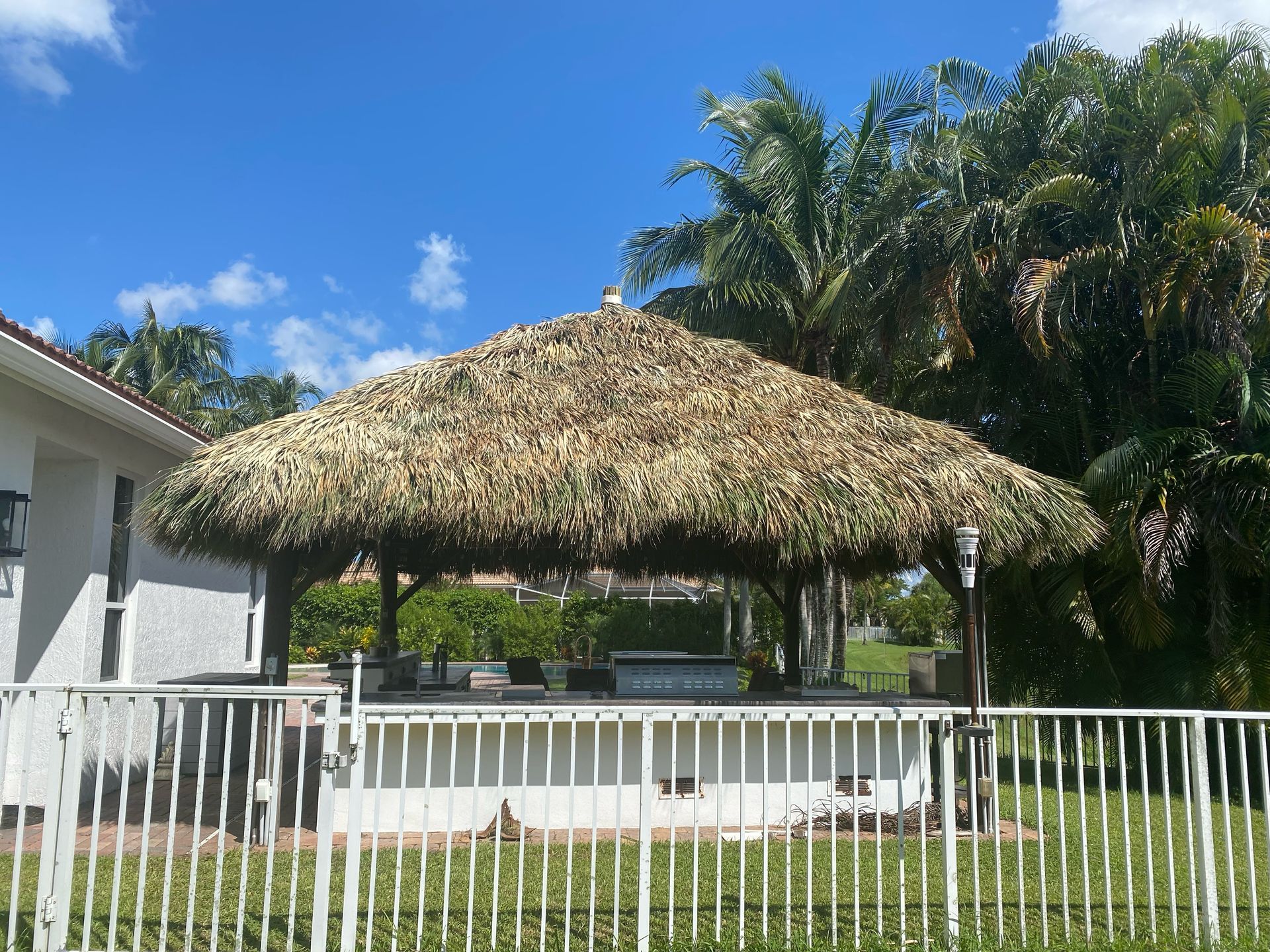
A commercial tiki hut has more people depending on it than a backyard build ever will. These are the features we plan into every commercial project and the ones worth asking any contractor about before you sign.
01
Engineering for Hurricane-Zone Wind
Permitted structures in Broward County must meet High-Velocity Hurricane Zone requirements. That affects post size, footing design, and connections, so we plan the frame around those loads from the beginning rather than reworking the design after it comes back from plan review.
02
Fire-Conscious Material Choices
Many commercial settings call for roofing that meets a Class A fire rating, which requires a flame spread index of 25 or lower under standard testing. We explain which thatch options fit those requirements and which ones fall short.
03
Guest Flow and Service Layout
Where people enter, sit, order, and walk past decides whether a tiki bar works. We map those paths against your seating count and staff stations, keeping posts and counters out of the way of both service and foot traffic.
04
Durable Framing Under Heavy Use
Guests lean on posts, hang bags from rafters, and crowd counters on busy nights. Pressure-treated southern yellow pine or cypress, sized and fastened for those loads, keeps the structure solid long after opening day has come and gone.
05
A Roof That Looks Full Every Season
Thin thatch shows wear quickly under guest scrutiny. Tighter layering with a heavier leaf count keeps the roof looking full longer, and it resists the gaps that let rain drip onto tables, drinks, menus, and cushions on the seating below.
06
Clear Warranty Terms
Property owners need to know what is covered. Our 2-year leaf warranty and 10-year structure warranty are spelled out before work begins, which makes planning long-term maintenance budgets and reporting back to ownership or a management company much more straightforward.
WHO WE ARE
Larger Projects, Same Hands-On Crew
We have completed tiki projects for resorts, hotels, restaurants, and apartment communities, and those jobs run with the same owner-led approach as a backyard build. You deal directly with people who understand thatching and framing, not a rotating cast of project managers. We explain what we recommend, why it costs what it does, and where a competing bid may differ, so you can make the call your property needs. Reach out through our contact page to set up a walkthrough of your site.
Frequently Asked Questions
Do commercial tiki huts need to meet fire code requirements?
Often, yes. Requirements depend on the occupancy, location, and local fire marshal, but many commercial projects need roofing rated Class A or treated for fire resistance. Confirming the requirement early decides whether natural palm, treated palm, or synthetic thatch fits.
How are commercial tiki structures built for hurricane winds?
Outside the tribal chickee exemption, a tiki structure in Broward County needs engineering that satisfies the High-Velocity Hurricane Zone. That drives larger posts, stronger connections, and engineered footings, which is why commercial bids should show how wind loads are handled.
Can a tiki bar project be scheduled around restaurant hours?
In most cases, yes. SoFlo Tikis talks through your service schedule before work starts, and on restaurant projects around Oakland Park, FL, we look at timing noisy framing or rethatching around peak hours to limit disruption for staff and diners.
How often should a resort rethatch its tiki huts?
Natural palm on an exposed, beachside property usually needs rethatching sooner than a sheltered backyard roof, often within about 5 to 7 years. Salt air, full sun, and wind all shorten that window, so annual inspections help you budget ahead.
What should property managers compare between commercial tiki bids?
Compare lumber type, leaf count or synthetic product, wind engineering, fire rating, warranty terms, and who actually does the work. Two bids that differ widely in price usually differ in one of those areas, and asking directly brings it out.
Is synthetic thatch worth it for a high-traffic property?
For many commercial owners, it is. Synthetic thatch lasts far longer between replacements and keeps a consistent look, which avoids closing guest areas for rethatching. Natural palm still wins on authentic texture, so the choice often comes down to priorities.
What does the Florida chickee exemption mean for a commercial property?
The exemption covers only open-sided wooden huts built by Seminole or Miccosukee tribe members with no electrical, plumbing, or non-wood features. Commercial structures with lighting, bars with sinks, or concrete bases generally fall outside it and require permits.
What maintenance does a commercial tiki bar need?
Plan on inspections once or twice a year, along with a check after every major storm. Across 15 years of tiki work around Coconut Creek, FL, SoFlo Tikis has seen early fixes to loose leaves keep small repairs from turning into full rethatches.
Why Choose SoFlo Tikis
Building Custom Tiki Huts for Every Outdoor Space
01
15 Years of Specialized Tiki Construction
We have 15 years of specialized experience building custom tiki huts for residential and commercial properties throughout South Florida. Our projects include homes, hotels, resorts, restaurants, apartment communities, and other commercial properties.
02
Higher-Quality Materials & Denser Thatching
We use pressure-treated wood for greater durability and resistance to rot and moisture in South Florida's outdoor conditions. Our thatching is installed tighter and with substantially more palm leaves than many traditional tiki builds, creating a thicker, fuller roof with better coverage and long-term durability.
03
Fully Custom Tiki Hut Construction
We custom-build every tiki hut around the property, available space, layout, and intended use. Nothing is prefabricated, giving each residential or commercial property a tiki structure designed specifically for the space.
04
Honest, Knowledgeable Customer Guidance
We explain the materials, construction methods, and important differences customers should look for when comparing tiki hut builders. Our straightforward approach gives customers the information they need to understand their options and make an informed decision without a high-pressure sales pitch.
Give Your Guests A Tiki Setting That Holds Up Through Every Season
Guests remember the shaded bar by the pool and the patio that felt like a getaway, and they notice when a roof looks tired or drips on their table. SoFlo Tikis builds commercial tiki huts and bars for properties in Coconut Creek & Oakland Park, FL with the framing, thatch density, and planning that busy outdoor spaces require. We explain our materials, methods, and warranty terms plainly, then let the work speak for itself. When you are ready to talk through a new build, a rethatch, or storm repairs, contact our team through our contact page to arrange a site visit.